
Writing code that works on your laptop has never been the hard part. Getting that code running reliably in production, handling real traffic, and surviving a failed deployment without taking the whole app down — that’s where cloud and DevOps knowledge separates a junior developer from someone a team can actually trust. A Cloud & DevOps Internship in Trichy is built specifically to close that gap, and it’s a gap most college courses barely touch.
What This Internship Actually Teaches
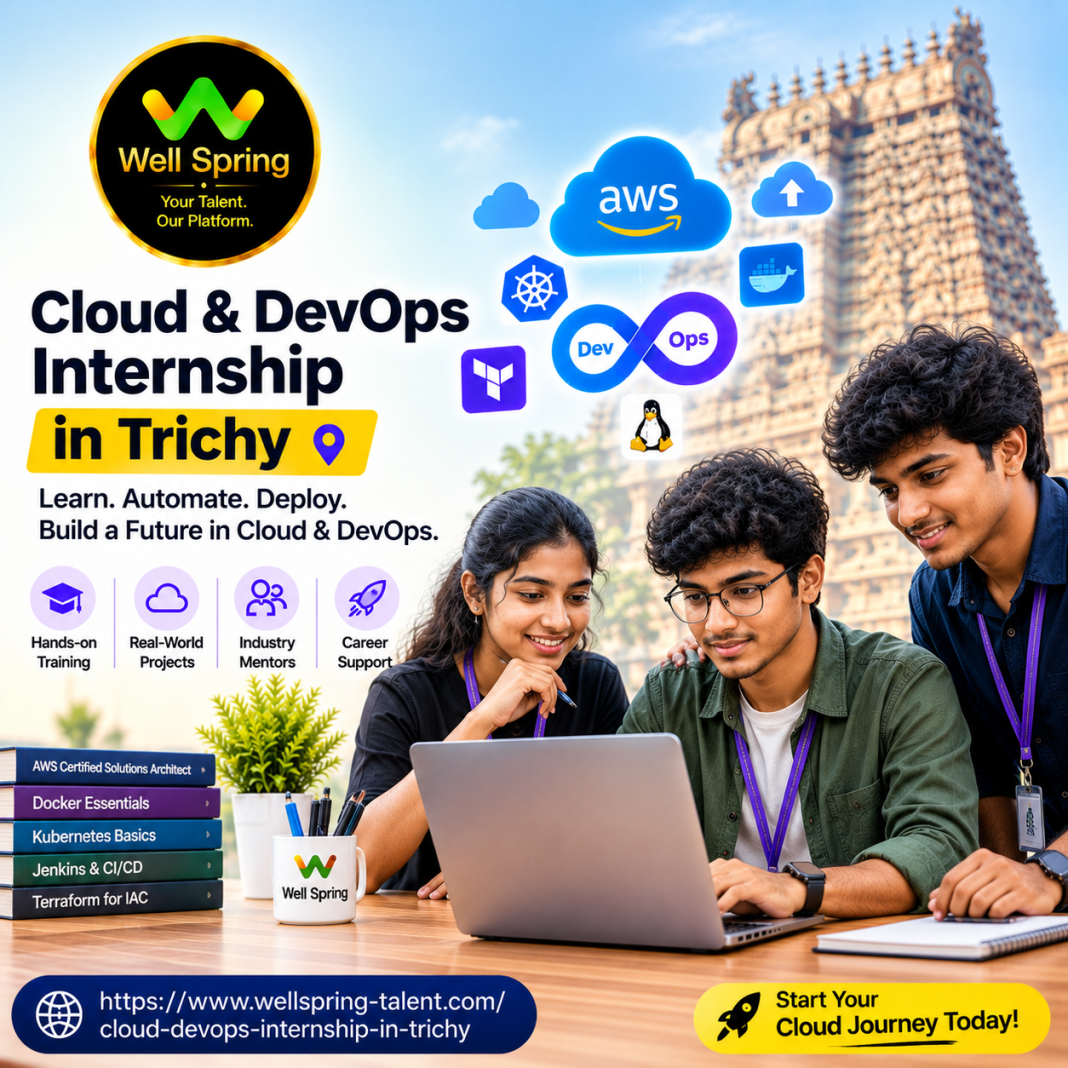
Expect to spend real time with a cloud platform such as AWS, covering core services like compute instances, storage, and basic networking, alongside the DevOps side: containerization with Docker, version control workflows, and automated deployment pipelines using tools like Jenkins or GitHub Actions. The goal isn’t to memorize service names — it’s to understand how an application actually gets from a developer’s machine to something users can access reliably.
Tools and Platforms You’ll Work With
A solid curriculum has you get hands-on with Docker for packaging applications, basic Kubernetes concepts for orchestration, CI/CD pipelines that automatically test and deploy code, and monitoring basics so you know when something breaks before a user has to tell you. None of this makes sense in a slide deck — it clicks when you’ve actually broken a deployment and had to figure out why.
From Code to Production: What You’ll Build
Most programs walk you through deploying a real application end to end: containerizing it, setting up a pipeline that tests and deploys it automatically on every code change, and hosting it on cloud infrastructure you configured yourself. By the end, you’re not just talking about CI/CD — you have a working pipeline you built and can explain line by line.
A Typical Day in the Program
Sessions usually mix short technical walkthroughs with a lot of hands-on lab time, since this is a field you genuinely can’t learn by watching alone. You’ll spend time in the terminal, in cloud consoles, and troubleshooting pipeline failures — which, annoyingly, is one of the most valuable parts of the whole experience, because production issues rarely announce themselves clearly.
Who This Internship Is For
This suits computer science students who already know how to code and want to understand what happens after the code is written, as well as students eyeing DevOps, site reliability, or cloud engineering roles specifically. It’s a demanding track, so it helps to come in comfortable with basic Linux commands and at least one programming language, even if you’re not an expert yet.
Where This Skill Set Can Take You
Cloud and DevOps knowledge tends to make candidates more employable across the board, not just in dedicated DevOps roles — teams increasingly expect even application developers to understand deployment and infrastructure basics. Completing a Cloud & DevOps Internship in Trichy signals that you can be trusted with more than just writing functions; you understand how software actually reaches its users, which is a very different level of trust for a team to hand a fresher.
Why This Knowledge Ages Well
Frameworks and languages go in and out of fashion, but the underlying idea of packaging an application, automating its testing, and deploying it safely isn’t going anywhere. If anything, teams are leaning on these practices more as systems get more complex and outages get more expensive. Learning this early means you’re not scrambling to catch up on infrastructure basics five years into your career, after you’ve already been asked to fix a production issue you don’t fully understand.
Getting Started
If you’re tired of code that only ever runs on your own machine, a Cloud & DevOps Internship in Trichy gives you the infrastructure, pipeline, and cloud experience that most fresh graduates simply don’t have yet. It’s less glamorous than building a flashy app, but it’s often the difference-maker on a resume when a hiring manager is deciding between two similarly qualified candidates.